❝ 1. TOKYO: THE UNLIKELY BEGINNING ❞
Tokyo, 1969.
The air hums with quiet ambition.
Neon signs blink over alleys where new ideas are born.
In a small studio, a young woman named Rei Kawakubo is sketching—not clothes, but questions.
She doesn’t dream of Paris, glamour, or runways.
She dreams of disobedience.
“I wasn’t interested in what existed.
I wanted to create what was missing.” — Rei Kawakubo
From that spark, Comme Des Garcons emerges.
Not a fashion label, but a new way of seeing.
✧ 2. THE NAME THAT MEANT FREEDOM
Comme Des Garcons — “Like Boys.”
Not about gender.
About liberation.
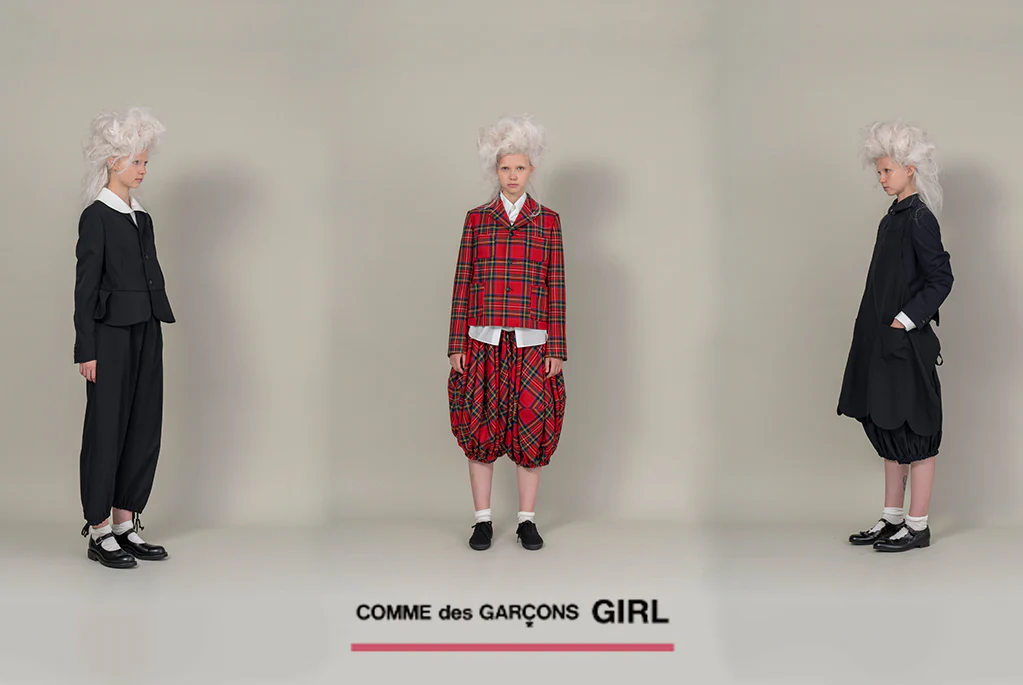
The early 1970s Tokyo fashion scene was polished, feminine, Westernized.
Rei’s designs were everything it was not:
- Black.
- Uneven.
- Oversized.
- Honest.
Her clothes didn’t flatter.
They confronted.
Every piece said: you don’t need to be beautiful to be powerful.
In a culture obsessed with precision, Rei chose imperfection as her muse.
✦ 3. THE CROWS: TOKYO’S DARK ANGELS
They appeared like ghosts in black —
the students, the dreamers, the disbelievers.
They called themselves The Crows.
Dressed entirely in Comme Des Garcons,
they walked Tokyo’s streets like a living installation.
Their aesthetic wasn’t about sadness —
it was about sovereignty.
The Crows turned Harajuku and Aoyama into silent runways of thought.
Fashion had found its underground philosophers.
❖ 4. 1981: WHEN PARIS SAW THE STORM
Paris Fashion Week, 1981.
Lights dim. Music fades.
Models walk out — pale, expressionless, wrapped in black.
The audience gasps.
The critics panic.
The word “beautiful” disappears from the room.
They call it “Hiroshima Chic.”
They call it ugly.
Rei calls it truth.
“Fashion is not about fantasy.
It’s about what’s real.” — Rei Kawakubo
This was not a debut — it was a detonation.
Tokyo’s quiet rebellion had gone global.
✺ 5. THE SCIENCE OF DECONSTRUCTION
Before “deconstruction” was a buzzword, Rei was already doing it.
She turned garments inside out.
She exposed seams.
She let fabric misbehave.
Every rip was deliberate.
Every flaw was philosophy.
She asked:
Can destruction be beautiful?
Can absence have presence?
The world had no answer — so she gave it one, season after season.
✶ 6. AOYAMA: THE WHITE TEMPLE
In the heart of Tokyo, Aoyama became the sacred ground of Comme Des Garcons.
Inside Rei’s atelier, silence ruled.
No music. No chaos.
Only the rhythm of thought.
The space looked more like a lab than a studio.
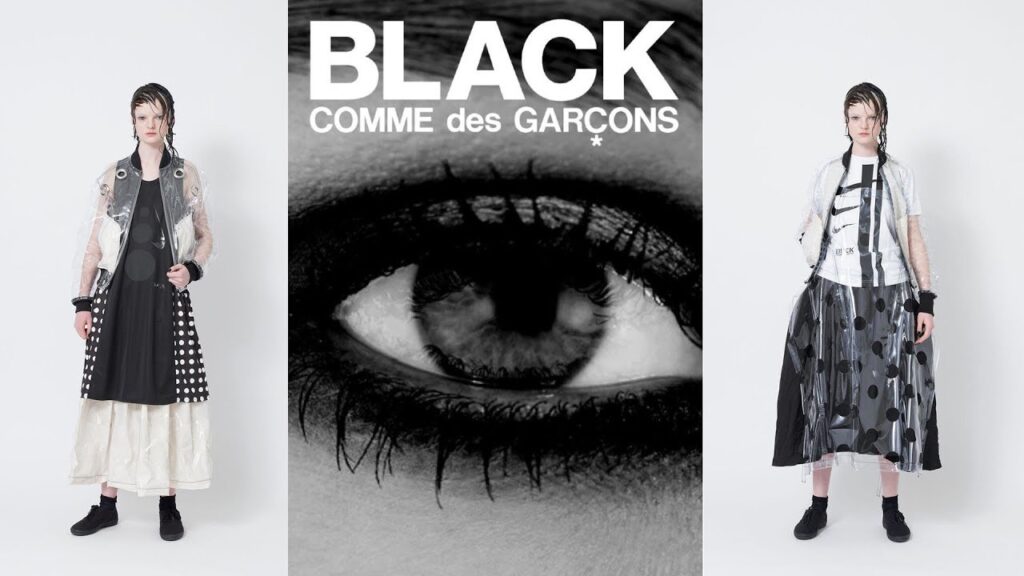
There, Rei and her protégés — Junya Watanabe, Tao Kurihara, Kei Ninomiya —
learned to build ideas, not just garments.
Every fold, every stitch, was a decision.
Every collection, a hypothesis.
Comme Des Garcons had become a school of rebellion.
⚡ 7. THE 1990s: WHEN FASHION TURNED INTO THEORY
By the 1990s, Rei’s work moved beyond design — into philosophy.
Collections like:
- Body Meets Dress, Dress Meets Body (1997)
- Lumps and Bumps (1998)
- Holes (1999)
…broke the rules of beauty itself.
Her models looked alien, unbalanced, divine.
She distorted form to liberate identity.
The result: a new global vocabulary —
where imperfection became elegance, and discomfort became truth.
❤️ 8. PLAY: THE HEART THAT SMILED
A surprise from the queen of seriousness.
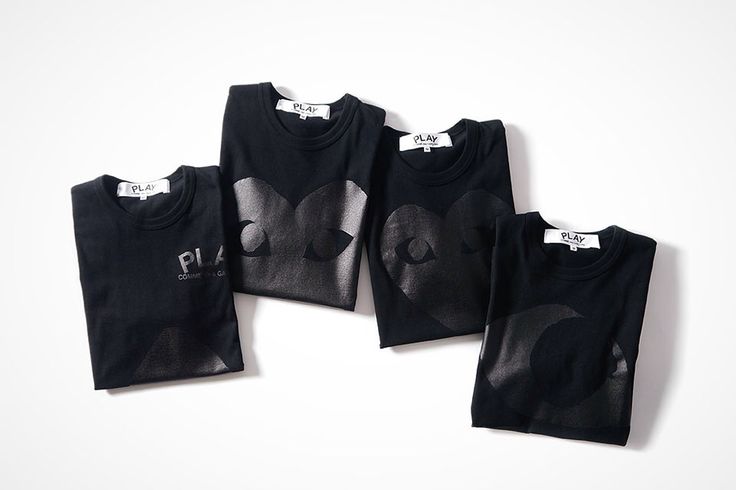
Comme Des Garcons PLAY arrives —
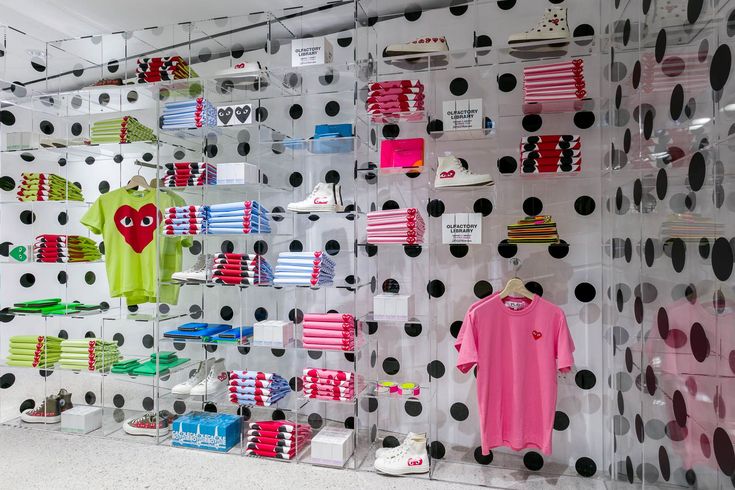
T-shirts, minimal cuts, a red heart with eyes by Filip Pagowski.
It was lighthearted but thoughtful,
simple yet philosophical.
PLAY became everywhere: Tokyo, Paris, Seoul, New York.
Rei didn’t chase streetwear; she invented its soul.
Collaborations followed:
Nike, Supreme, Converse, Louis Vuitton —
each one bearing her disciplined rebellion.
✴︎ 9. DOVER STREET MARKET: THE TEMPLE OF CHAOS
London.
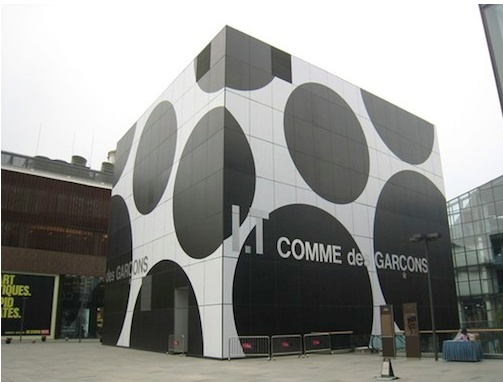
Rei and Adrian Joffe launch Dover Street Market —
not a boutique, but an experience.
Installations replace mannequins.
Walls are rebuilt each season.
Art bleeds into commerce.
She calls it “beautiful chaos.”
And it is.
Every Dover Street Market — from Tokyo to New York —
feels like stepping into Rei’s mind:
order and disorder coexisting in perfect tension.
🌙 10. 2010s: WHEN FASHION BECAME SCULPTURE
By the 2010s, Rei Kawakubo had transcended clothing.
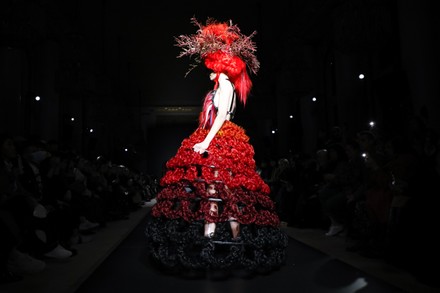
Her shows turned into living architecture.
Dresses became structures, soundscapes, emotions.
In 2017, The Met honored her with
“Rei Kawakubo / Art of the In-Between.”
Only one other living designer had ever received that recognition.
Rei’s pieces stood still,
half-human, half-idea —
beyond language, beyond season.
Fashion had finally caught up.
🕊 11. TOKYO NOW: LIVING IN HER SHADOW
Walk through Tokyo today and her spirit hums beneath the neon.
In Aoyama, her minimalist architecture still whispers.
In Koenji and Shimokitazawa, young stylists twist thrift into philosophy.
In Shibuya, the chaos still dances in Comme’s rhythm.
She turned Tokyo into an idea —
a city that dresses with consciousness.
❝ 12. THE WOMAN WHO NEVER EXPLAINED ❞
Rei Kawakubo rarely gives interviews.
She never smiles for cameras.
Her silence is her signature.
“When you create something new, you destroy something old.”
Her work is not decoration.
It’s documentation —
of evolution, of emotion, of human complexity.
Every thread she cuts becomes a sentence.
Every absence, an answer.
✧ 13. BEYOND JAPAN, BEYOND FASHION
From the concrete poetry of her early Tokyo years
to the sculptural drama of her Paris collections,
Rei built not a brand —
but a belief system.
She taught the world that fashion doesn’t have to decorate life —
it can define it.
Her influence bleeds through Margiela, Rick Owens, Sacai, Vetements,
and every designer brave enough to say “What if?”
✨ 14. THE ETERNAL BLACK
Black — her signature color.
To Rei, not a symbol of mourning, but of potential.
Black absorbs all colors.
It carries mystery, memory, and possibility.
It is the color of depth, of thought, of transformation.
And so, she gave the world permission to find beauty
not in brightness — but in the quiet.
🌑 EPILOGUE: THE FREEDOM OF NOT FITTING IN
In the story of fashion, Rei Kawakubo’s chapter is written in silence and shadow.
She began in Tokyo —
a woman unafraid to destroy beauty to rebuild meaning.
She taught us that imperfection is not failure.
That simplicity can scream.
That rebellion can be elegance.
Comme Des Garcons is not fashion.
It’s philosophy.
And its first language was Japanese.
“It is not about clothes.
It is about living with the courage to be misunderstood.” — Rei Kawakubo